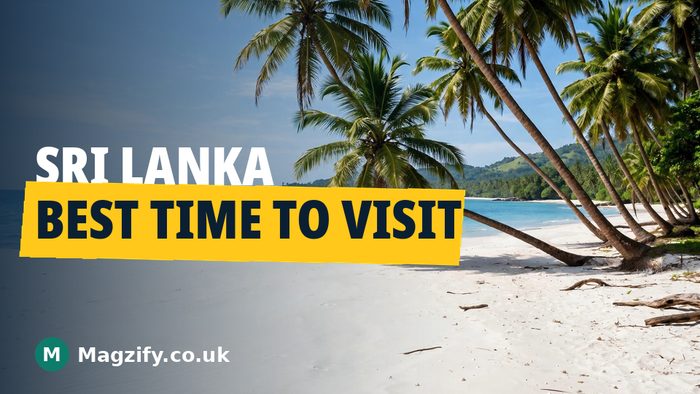
The best time to visit Sri Lanka depends on which coast you are heading to, because the island has two monsoon seasons affecting opposite sides. For the south and west coasts (Colombo, Galle, Mirissa) plus the Cultural Triangle, go between December and April.
For the east coast (Trincomalee, Arugam Bay), the best months are May to September. Temperatures sit around 27 to 30°C year-round, so timing is about rain, not heat.
Key takeaways
- December to April: best for the south/west coasts and the Cultural Triangle.
- May to September: best for the east coast beaches and surf.
- Sri Lanka has two monsoons: Yala (May to Sep, south/west) and Maha (Oct to Jan, north/east).
- Shoulder months (April, September) mean lower prices and fewer crowds.
- Whale watching peaks December to April off Mirissa; surf peaks May to September at Arugam Bay.
Sri Lanka's Two Monsoon Seasons Explained
Sri Lanka's weather is shaped by two monsoons. The Yala monsoon (May to September) brings rain to the south and west, while the Maha monsoon (October to January) affects the north and east.
The clever part: when one coast is wet, the other is usually dry, so there is almost always a good beach somewhere on the island. The hill country around Kandy and Ella gets rain from both systems but is visitable year-round with a flexible attitude.
December to April: South, West and the Cultural Triangle
These months bring dry, sunny weather to Colombo, Galle, Bentota, and Mirissa, with calm seas ideal for whale watching (blue whales peak February to April).
It is also the best window for the Cultural Triangle (Sigiriya, Anuradhapura, Polonnaruwa) and Yala National Park safaris. Expect the highest hotel prices and the most visitors, especially over Christmas and New Year, so book accommodation well ahead.
May to September: The East Coast Season
While the southwest gets rain, the east coast shines. Trincomalee offers calm bays and Pigeon Island snorkelling, and Arugam Bay hosts some of Asia's best surf breaks from June to August.
This side of the island is quieter and cheaper than the southwest in peak season. If your trip falls in these months, simply build your itinerary around the east and add the hill country, which is pleasant year-round.
Shoulder Months and When to Avoid
April and September are the shoulder months: the monsoons are changing over, prices drop, and crowds thin out, though you may catch some rain anywhere.
October and November are the trickiest period, as the Maha monsoon arrives and both coasts can be unsettled. That said, Sri Lanka's rain often falls in short, heavy bursts with sunshine between, so even "wet" months are rarely a washout.
Planning Tips for UK Travellers
UK passport holders need an ETA (Electronic Travel Authorisation) before flying, applied for online in advance. Direct flights from London to Colombo take about 10 hours; SriLankan Airlines flies the route nonstop.
The island is compact, so combine beach, culture, and safari in a 10 to 14 day trip: a classic loop is Colombo → Cultural Triangle → Kandy/Ella → south coast. Pack light, breathable clothes, a rain jacket whatever the season, and modest dress for temples (cover shoulders and knees).
FAQ
What is the best month to visit Sri Lanka?
February is hard to beat for the south and west: dry, sunny, and peak whale watching season. For the east coast, aim for July.
When is the rainy season in Sri Lanka?
The Yala monsoon (May to Sep) wets the south/west; the Maha monsoon (Oct to Jan) wets the north/east. The other coast stays dry in each case.
Is Sri Lanka good in August?
Yes, for the east coast (Trincomalee, Arugam Bay) and the hill country. The southwest will be rainy, so plan your route accordingly.
How many days do I need in Sri Lanka?
10 to 14 days covers beaches, the Cultural Triangle, hill country, and a safari without rushing. A week works if you stick to one region.
Do UK citizens need a visa for Sri Lanka?
You need an ETA applied for online before travel. It is quick to arrange and linked to your passport.
What is the currency in Sri Lanka?
The Sri Lankan rupee. Cards work in hotels and larger restaurants, but carry cash for tuk-tuks, markets, and small towns.